
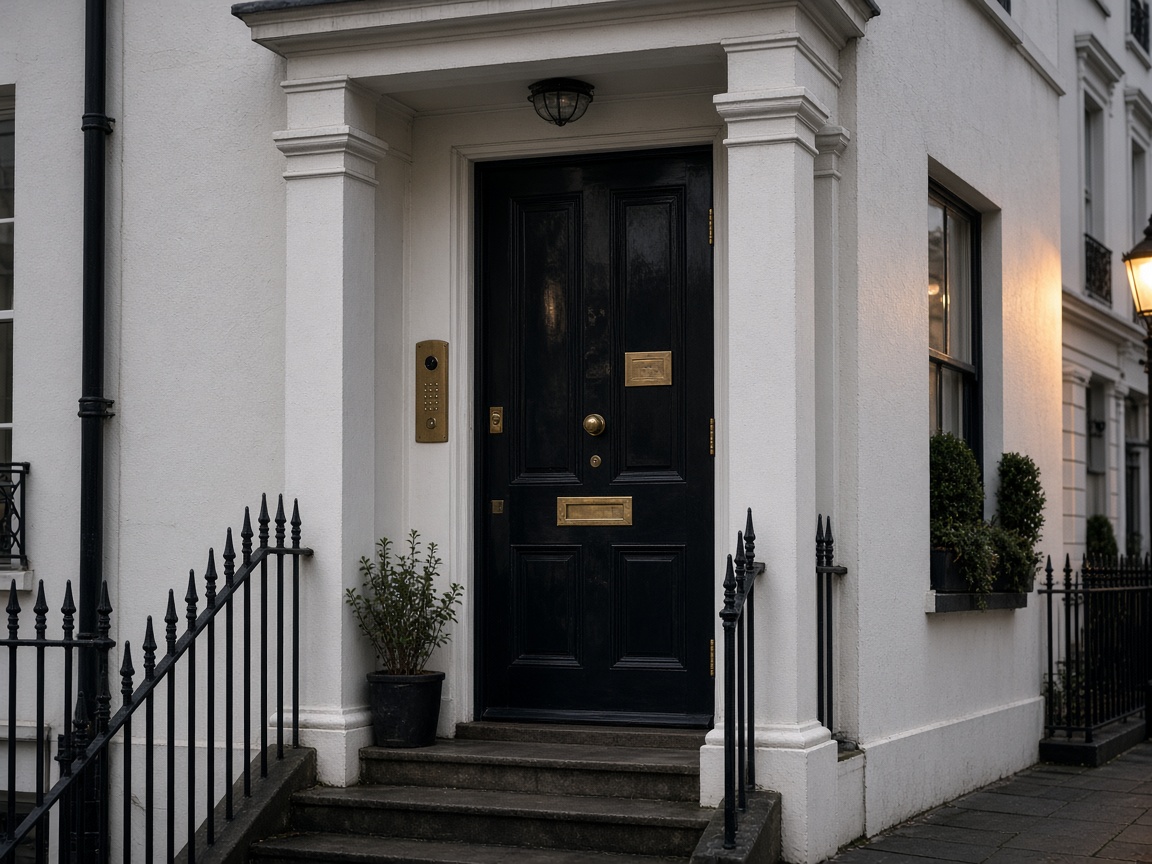
London postcodes are wonderfully precise for post and frustratingly vague for finding a particular front door. A single postcode can cover several buildings, a side street and a row of shops, and a map pin dropped on it may lead you to the back of the right building or the front of the wrong one. If you are visiting a massage studio location London clients have not been to before, a few checks in advance can turn a stressful search into a calm arrival.
This guide focuses on the final few hundred metres: the entrance, the doorbell or reception, and what to do if your phone sends you somewhere unexpected. It does not list addresses, stations or walking times for any venue. For our current location information, see the our location page, and for an overview of areas people often choose, read the best locations in London for a tantric massage.
Quick answer: why should I confirm the entrance before visiting a massage studio?
Because a postcode tells you the general area, not the exact door. Many London buildings have more than one entrance, shared lobbies, side doors or buzzer systems, and map apps sometimes place a pin in the middle of a block. Confirming the precise entrance, how to announce yourself and who to contact if you get lost helps you arrive on time and without unnecessary stress.
Massage studio location in London: postcode versus exact entrance
What a postcode actually covers
A UK postcode identifies a small group of addresses rather than a single doorway. In dense parts of London, that group might include a mix of flats, offices and shops, sometimes with entrances on different streets. Royal Mail’s postcode finder is useful for checking that a full address and postcode belong together, but even a correct postcode is not a set of door-finding directions.
How map pins can mislead
Navigation apps estimate where a postcode or address sits. The pin might:
- fall in the centre of a large building with entrances on several sides;
- point to a delivery entrance rather than the visitor entrance;
- sit on a parallel street when the building has a long footprint;
- lag behind recent changes such as new doorways or renumbered buildings.
None of this is the app’s fault. It is simply the limit of using a postcode as a destination.
Street name and building details
Alongside the postcode, the most useful information is the street name, the building name or number, and any description of the entrance itself. If you have those, you can usually find the door even if the map pin is slightly off.
Confirming arrival instructions
Arrival instructions are the bridge between a postcode and a door. Providers share them in different ways and at different times, so it is sensible to ask in advance what to expect.
What to ask reception
- “Could you confirm the full address, including the building name or number?”
- “Which entrance should I use, and is it on the main street or a side street?”
- “Is there a doorbell, intercom or reception desk, and what should I say?”
- “When will I receive arrival instructions if they are sent separately?”
- “Who should I contact if I cannot find the entrance?”
You do not need all of these answered in the first message. Some businesses share precise details closer to the time, which is a normal approach. The important thing is knowing when they will arrive and having a contact route if they do not.
Saving instructions for the journey
Once you have the instructions, save them somewhere you can reach quickly without mobile data. A screenshot works well. Mobile signal can be patchy in some stations and buildings, and searching through a long email chain while standing on a busy pavement is not ideal.
Doorbells, buzzers and announcing yourself
Shared buildings often use an intercom panel with numbered or named buttons. If your instructions mention a flat or suite number, note it carefully. Some visitors find it helpful to know in advance how to introduce themselves at the intercom, such as giving their first name and appointment time. Ask reception if there is anything specific you should say.
Station exits and walking routes
Many people arrive by Tube, rail or bus, and the last stretch on foot is where most wrong turns happen.
Choose your exit before you arrive
Larger stations can have several exits that lead to quite different streets. Before you travel, look at a station map or the exit information in your journey planner and decide which exit faces the street you need. Coming out on the wrong side of a busy road can add more time than you would expect.
Plan the walk, not just the train
Journey planners can show walking routes from a station to a street address. Transport for London’s guidance on planning an accessible journey explains settings such as reducing walking distance, avoiding stairs or choosing step-free routes. Even if you do not need those features, they show how much a journey can vary depending on route choices.
Check what you see against what you expect
As you walk, compare street signs and building numbers with your instructions. If the numbering suddenly jumps or the street name changes, pause and check before carrying on. It is much easier to correct course after one block than after five.
Worked example: a pin in the wrong place
Lena is visiting a venue for the first time. Her map app guides her to the postcode, and the pin sits on the corner of a large building. She walks round the front and finds an office reception with no sign of the business.
Because she saved her arrival instructions, she checks them: the entrance is on the side street, next to a numbered door with an intercom. She walks round the corner, finds the door within a minute, presses the correct button and gives her first name. She arrives on time and relaxed.
Now imagine the same walk without instructions. Lena might have tried the office reception, waited, searched online, and eventually phoned the business after her start time. The difference was not luck; it was preparation.
Getting help if lost
Even with good planning, things go wrong. Roadworks block a street, a door is temporarily closed, or a phone battery runs low.
Contact the business promptly
If you cannot find the entrance, contact reception using the details from your confirmation or the official contact page. Explain where you are by describing a nearby landmark, a shop name or the street sign you can see. Reception can usually guide you from there.
Do not wander far
If you are close, stay near the point where you realised you were lost while you make contact. Wandering further can make it harder to give useful directions.
Keep your phone charged
A small power bank is worth carrying if your phone is your map, your ticket and your contact list all at once.
Mention timing
If getting lost will make you late, say so in the same message. The provider can then let you know how this affects your appointment, rather than you guessing.
Arriving by car, taxi or ride-hailing
Not everyone arrives on foot from a station. If you are being dropped off, the entrance question matters even more, because drivers naturally stop wherever the navigation pin sits.
Share the right details
Give the driver the street name and building number rather than only the postcode. If the entrance is on a side street, mention it at the start of the journey so the driver can plan the final turn. Many central London streets are one-way, and a missed turn can add several minutes.
Check stopping restrictions
Some streets have restrictions on where vehicles can stop. If the driver cannot pull up directly outside, agree a nearby point and walk the last stretch. Your arrival instructions will help you get from there to the door.
Parking
If you are driving yourself, check parking options before the day. Central London parking can be limited and expensive, and some areas fall within charging zones. Ask reception whether there is anything they can tell you about nearby parking, but do not assume they can reserve or guarantee a space.
Visiting at different times of day
The same street can look quite different at different times. A shopfront that is a useful landmark at midday may have its shutters down in the evening, and a doorway that is easy to spot in daylight can be harder to find after dark.
- Evening visits. Street lighting and closed shops can change what you see. If possible, look at street view imagery taken at a similar time, or ask reception for a landmark that is visible after dark.
- Weekend visits. Markets, events and road closures can alter walking routes, particularly in busy central areas. Check for planned closures before you set off.
- Early appointments. Some building entrances or lobbies may operate differently outside office hours. Ask whether the entrance changes depending on the time.
If you are visiting London for the first time
Visitors often face the double challenge of an unfamiliar city and an unfamiliar venue. A few additional steps help:
- Download offline maps of the area before you travel, in case mobile data is limited.
- Practise the route on a map the evening before, noting the station exit and key turns.
- Save the provider’s contact number in your phone with a clear name, so it is easy to find in a hurry.
- Allow a more generous buffer than you would in a city you know well.
A pre-visit arrival checklist
Use this the day before your appointment:
- I have the full address, including building name or number.
- I know which entrance to use, or when the instructions will arrive.
- I know whether to use an intercom, doorbell or reception.
- I have checked my station exit and walking route.
- I have saved the instructions and contact details offline.
- My phone is charged, or I have a power bank.
- I have allowed extra time for the final stretch on foot.
Respecting a shared building
Many studios and therapy rooms in London sit in buildings shared with residents or other businesses. Arriving calmly, keeping conversations at the door brief and following any instructions about which bell to press helps everyone. If you arrive early, it is often better to wait nearby than in a shared hallway, unless reception has suggested otherwise.
Common questions
Why might a provider share the exact entrance only after booking? Some businesses prefer to share precise arrival details with confirmed clients. It is a common practice and not a cause for concern on its own.
What if the address in my confirmation looks different from the website? Ask reception to confirm which is correct before you travel. Do not assume either version is right.
Can I rely on a ride-hailing app to find the entrance? Drivers often stop at the pin location, which may not be the right door. Share the street name and building details with the driver, and check the entrance yourself on arrival.
Should I arrive early to allow time to find the door? A small buffer helps. Ask reception how early is appropriate, as some venues prefer you not to arrive too far ahead.
What should I do if the entrance appears closed? Contact reception straight away rather than trying other doors in the building.
Arriving with confidence
A postcode gets you to the neighbourhood. The entrance details get you through the door. Confirm the full address, the exact entrance and how to announce yourself, plan your station exit and walking route, and keep a contact route handy in case anything changes. Each venue is different, so ask rather than assume.
Before your next visit, confirm the entrance and appointment address with reception so your arrival is as smooth as the rest of your appointment.