Booking a couples session sounds simple until you realise you and your partner may want quite different things. One of you might love firm pressure and silence; the other might prefer a lighter touch and a little conversation. One might be relaxed about sharing a room; the other might feel self-conscious. Understanding couples tantric massage preferences before you book helps both of you enjoy the experience on your own terms.
This guide covers how to discuss expectations, how to protect each person’s comfort and privacy, what room arrangements might be available and how to confirm what a service actually includes. It does not describe the layout or options at any particular venue. For details of our service, see our couples massage in London page, and for a general introduction, read our article on what couples massage is and how it works.
Quick answer: what if partners want different things from a couples massage?
That is common and perfectly manageable. Each partner can state their own preferences about pressure, conversation, music, areas to avoid and comfort, and a professional provider should treat each person as an individual client. Talk about expectations privately with each other first, then share both sets of preferences when you enquire. Ask the provider what arrangements are possible, and agree that either of you can ask for a change at any time.
Discussing expectations separately
Why talk first
Partners often assume they want the same experience. A short, honest conversation before booking can reveal differences that are much easier to handle in advance than in the room.
Questions to ask each other
- What do you hope to get out of the session?
- Do you prefer firm or light pressure?
- Would you rather talk, or have quiet?
- Are there any areas you would like avoided?
- How do you feel about being in the same room?
- Is there anything that would make you uncomfortable?
Letting each person answer freely
Some people adjust their answers to please a partner. Make it clear that there is no right answer and that it is fine to want something different. The session should feel good for both of you, not just one.
Individual consent
Each partner gives their own consent. One person cannot agree on behalf of the other. If either of you is unsure, it is better to discuss that before booking than to go ahead reluctantly.
Privacy and comfort
Physical comfort
Each of you can ask for your own pressure, temperature and positioning. Practitioners can adjust for each person individually.
Emotional comfort
Some people feel more relaxed with their partner nearby; others feel more self-conscious. Neither feeling is wrong. Name it and ask about options.
Privacy during consultation
If either partner wants to mention something privately, such as a health matter, ask whether consultations can happen separately. You might say, “Would it be possible for each of us to speak to our practitioner briefly on our own before we start?”
Communication during the session
The American Massage Therapy Association’s article on better client communication discusses how good communication during intake and throughout a session helps practitioners understand what each client wants. With two clients, that matters even more, because each person’s feedback needs to reach their own practitioner.
One-room versus other arrangements
Same room, side by side
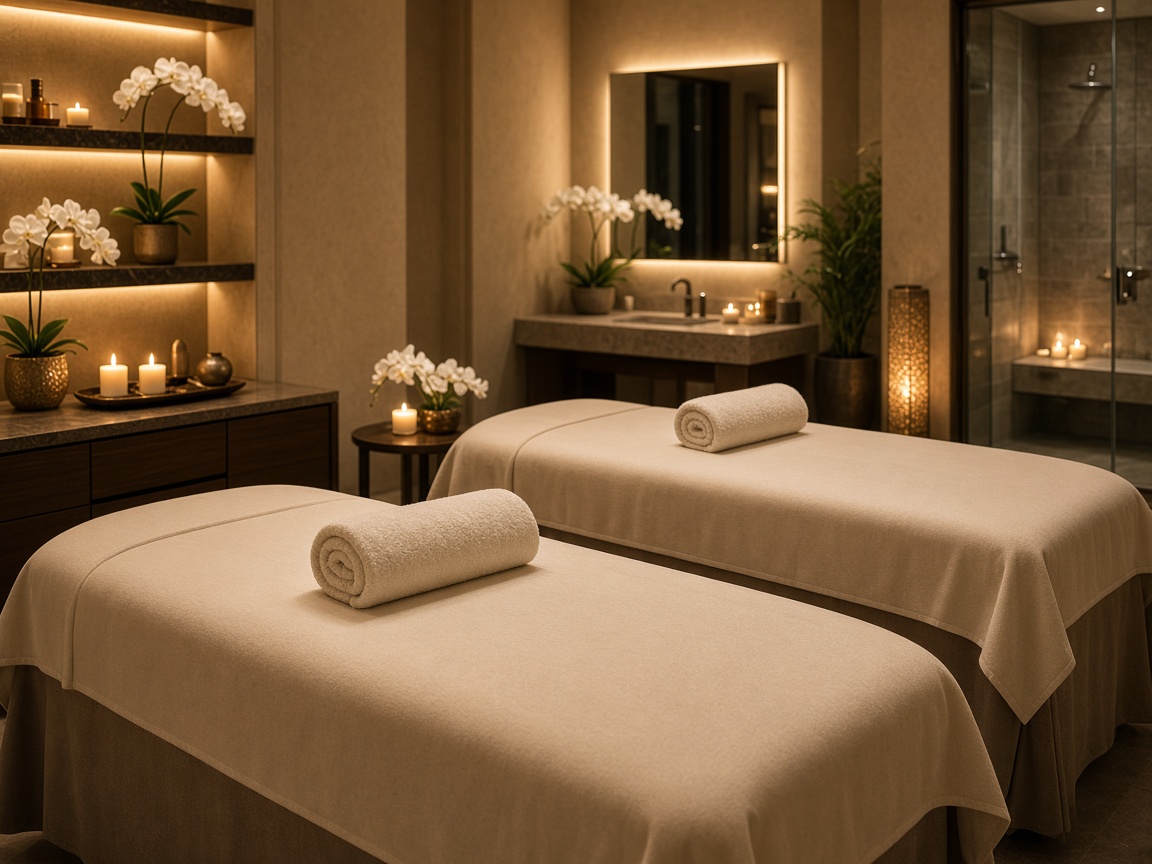
Many couples sessions take place in a single room with two practitioners working at the same time. This can feel shared and connected. It also means each partner can hear the other’s conversation.
Separate rooms
Some couples prefer to book individual sessions at the same time in separate rooms, then meet afterwards. This gives each person complete privacy. Do not assume a venue can offer this; ask.
Back-to-back sessions
If simultaneous sessions are not available, one partner might go first while the other waits or does something else. This can work well when preferences are very different.
Asking what is available
Ask reception which arrangements are possible for couples. Venues differ in room size, availability and how they structure couples sessions, so confirm the options directly.
Confirming what the service offers
Read the service description
Check what the couples service includes, how long it lasts and how the price is set. Compare it with what each of you wants.
Ask specific questions
- “Can each of us choose our own pressure and style?”
- “Are both practitioners in the room at once?”
- “Can we have separate consultations?”
- “Can one of us stop early without affecting the other?”
- “Is there a quieter option if one of us prefers no music?”
Get answers in writing
Keep the confirmation. It helps if there is any confusion on the day.
Individual choice
The AMTA guide on what to expect at a massage session emphasises that each client can make choices about conversation, technique and comfort. Being part of a couple does not remove that choice.
Worked example: different preferences
Nadia and Chris want to book a couples session for an anniversary.
Their conversation. Nadia wants firm pressure and silence. Chris prefers a lighter touch and would like to chat a little. Chris also mentions he is self-conscious about being in the same room.
Their enquiry. They explain both sets of preferences and ask whether separate rooms or a side-by-side arrangement would suit better.
The reply. The provider explains which arrangements are available and confirms that each partner can set their own pressure and conversation level.
Their choice. They opt for the arrangement that suits them both and agree that either can pause or stop without affecting the other.
On the day. Each has a short individual consultation. Nadia’s practitioner works in silence; Chris’s checks in occasionally. Both leave relaxed.
A second example: planning around privacy
Ola and Dev, together for a couple of years, have never had a massage before. Ola is excited; Dev is curious but private and would rather not discuss a back problem in front of anyone.
Before booking. They agree that Dev’s back is Dev’s to mention, and that Ola will not raise it on Dev’s behalf.
The enquiry. They ask whether each of them can speak to their practitioner separately before the session, and whether pressure can differ between them.
The answer. The provider explains how consultations are handled and what is possible within the available rooms.
The outcome. Dev has a brief private word about the back before joining Ola. Neither has to compromise on comfort, and Dev’s information stays private.
The point of this example is simple: privacy within a couple is still privacy. Each person decides what to share and with whom.
Scenario walkthroughs
One partner is nervous
Reassure them that they can stop at any time. Consider whether a separate room or a shorter session would help.
One partner has an allergy
Mention it when enquiring, as products used in the room may affect both of you.
You disagree on whether to book at all
If one partner is not keen, it is better to wait. A couples massage only works when both people want to be there.
One of you wants to stop early
Agree beforehand that this is fine and ask how it would be handled. The other partner may continue or end too.
Writing down couples tantric massage preferences before you enquire
A short written summary keeps your enquiry clear and avoids one partner speaking for both. You could each fill in a few lines, then combine them into a single message.
A simple template
Partner one – Pressure: light, medium or firm. – Conversation: some chat, minimal, or silence. – Music: yes, low volume, or none. – Areas to avoid: any injuries or places you prefer not to be touched. – Products: any allergies or scent sensitivities. – Room: happy to share, or would prefer privacy.
Partner two – The same headings, answered independently.
Sending it
Paste both summaries into your enquiry, then add your questions about arrangements. A provider reading a message like this can see immediately where your preferences overlap and where they differ, and can answer more precisely.
Where mismatches usually come from
Differences between partners tend to fall into a few familiar areas.
Pressure
This is the most common difference. It is also the easiest to handle, because each practitioner adjusts for their own client.
Sound
One partner may find music soothing and the other distracting. In a shared room, the setting has to suit both, so a compromise such as low instrumental sound, or none at all, may be needed.
Self-consciousness
Some people relax completely with their partner nearby; others feel watched. If either of you feels this way, ask about separate rooms or screens, and do not assume they exist.
Expectations of the experience
One partner may see the session as a treat for relaxation, the other as a chance to try something new. Talking about this openly helps avoid disappointment, and it helps the provider explain honestly what the service does and does not include.
On the day
Arrive together, with time to spare
Rushing in late puts both partners on edge. Arriving a few minutes early leaves room for consultations and for settling in.
Remind each other of the plan
A quick word before you go in, such as “Remember, either of us can stop at any time”, reinforces what you agreed.
Speak up for yourself
Each partner should give their own feedback to their own practitioner. Try not to answer for each other, even with good intentions.
After the session
Take a few minutes to talk about how it went. What did each of you enjoy? Was anything less comfortable? These reflections are useful if you want to book again, and they keep the experience shared rather than assumed. If something did not feel right for either of you, you can raise it with the provider calmly and factually.
When only one partner has been before
If one of you is experienced and the other is new, the experienced partner may unintentionally set the tone. Let the newer partner ask their own questions and choose their own pace.
Equally, the newer partner should not feel obliged to match the other’s choices about pressure, length or style. Starting gently and adjusting later is a perfectly sensible approach.
A quick word afterwards about what each of you enjoyed helps you both plan any future visit.
A planning checklist
- Talk privately about what each of you wants.
- Agree that each person can have different preferences.
- Share both sets of preferences when enquiring.
- Ask about room arrangements and consultations.
- Confirm what the service includes and how it is priced.
- Agree how either of you can pause or stop.
- Keep the written confirmation.
If the booking marks a special occasion, you can mention it, though it is not required. It may help the provider understand your plans for the day.
Common questions
Do we have to have the same type of massage? Not necessarily. Ask whether different styles or pressures are possible.
Can we talk to each other during the session? Usually, if both of you want to. Agree beforehand.
What if one of us wants silence? Ask whether conversation can be kept low or whether separate rooms are available.
Can we book separate rooms? Ask the provider. Availability varies.
Is a couples session cheaper than two individual sessions? Pricing varies. Confirm directly.
Can one partner have a longer session than the other? It depends on how the provider schedules couples bookings. Ask whether lengths can differ.
Two people, two sets of preferences
A couples massage works best when each partner feels heard. Discuss expectations openly, share both sets of preferences with the provider, ask about room arrangements and confirm what the service includes. Every venue is different, so check the details.
When you get in touch, discuss both partners’ preferences so the session can suit you both.