
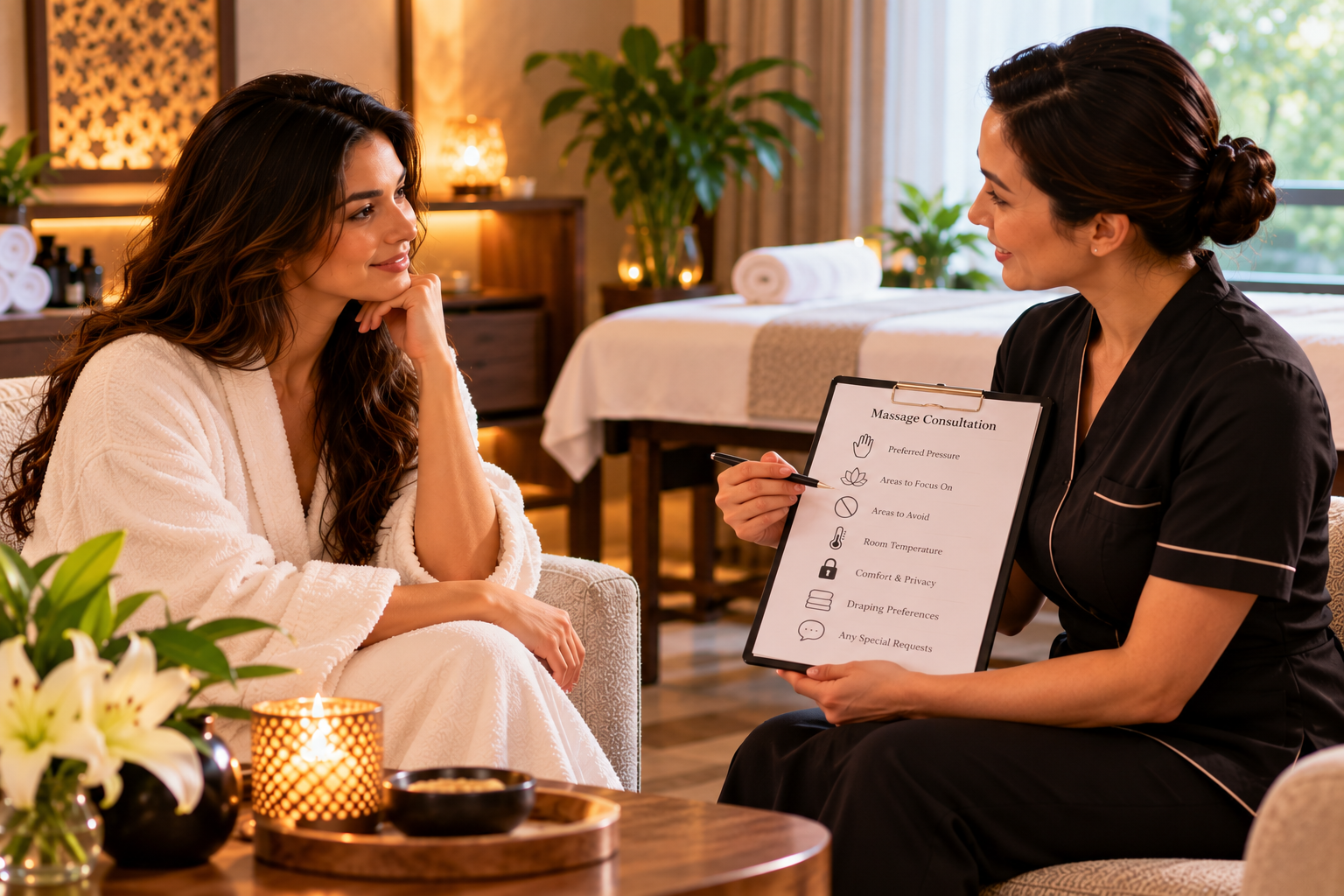
Booking a wellness appointment is an investment in your physical and mental health. When you schedule a session, you are setting aside dedicated time to heal, relax, and detach from everyday stress. However, achieving that perfect state of relaxation requires more than just showing up and lying on a table. The foundation of a truly restorative experience lies in clear, confident dialogue between you and your practitioner. Many individuals struggle with vocalizing their needs in a clinical setting, often deferring entirely to the professional. While trusting your practitioner is important, your body is uniquely your own, and your input is vital.
Mastering the art of vocalizing your needs transforms a standard treatment into a highly customized healing journey. By utilizing effective massage communication tips, you empower yourself to guide the session toward your specific goals. This comprehensive guide will explore the best strategies for defining your boundaries, requesting specific techniques, and ensuring your ultimate comfort from the moment you walk through the door.
The Importance of Vocalizing Needs
The therapeutic benefits of bodywork are deeply intertwined with your psychological state. If you are silently enduring discomfort or wishing the practitioner would focus on a different area, your nervous system remains alert and defensive. This subtle tension prevents your muscle fibers from fully releasing, thereby limiting the effectiveness of the physical manipulation.
Learning the process of communicating preferences to a massage therapist is the most crucial step in preventing this silent tension. Practitioners are highly trained in anatomy and technique, but they cannot feel what you feel. They rely on your verbal feedback to understand your internal physical landscape. By clearly stating your desires, you provide them with a roadmap to your personal healing.
Furthermore, expressing your requirements establishes a framework of mutual respect. It shifts the dynamic from a passive treatment to an active collaboration. When you understand exactly how to explain massage preferences before an appointment, you take ownership of your wellness journey, ensuring that every minute of the session is tailored to your exact physical and emotional capacity on that specific day.
Overcoming the Fear of Speaking Up
Many clients feel a sense of hesitation or anxiety about giving instructions to a certified professional. There is a common misconception that asking for changes implies criticism of the practitioner’s skills. In reality, professional therapists deeply appreciate clients who offer clear guidance.
If you are unsure of where to begin, gathering a few tips for discussing comfort during a massage can help build your confidence. Start by writing down your main areas of concern before you even arrive at the clinic. Having a mental or physical list prevents you from forgetting important details when you are put on the spot during the initial greeting.
It is also helpful to remember that your preferences can change from week to week. What felt wonderful during your last visit might feel too intense today. By practicing solid massage communication tips, you normalize the idea that your body is dynamic and requires a fresh approach every single time you step into the treatment room.
Navigating the Initial Consultation
The moments before you undress and get on the table are arguably the most important of your entire visit. This brief window is your primary opportunity to establish the rules of engagement for the hour ahead.
A thorough pre session consultation in London or any major city is standard practice at reputable wellness centers. During this time, the practitioner will typically ask about any recent injuries, chronic pain areas, or specific goals for the treatment. This is your cue to be as detailed and specific as possible.
When considering exactly what to tell a therapist during a pre session consultation, start with your primary physical complaints. If you have lower back pain from sitting at a desk, state that clearly. If you want them to completely avoid your feet because you are ticklish, make that boundary absolute. There is no detail too small when it comes to your personal bodily autonomy.
Detailing Your Physical Requirements
Beyond just listing your aches and pains, you must also discuss your emotional and sensory preferences. Bodywork is a holistic experience that engages all of your senses, and every element of the room contributes to your relaxation.
You should definitely include sensory massage communication tips in your dialogue. For example, if you prefer absolute silence rather than chatting, you can politely state that you intend to use the hour for quiet meditation. If the ambient music is too loud or the room temperature is too cold, the consultation is the perfect time to request adjustments.
Successfully communicating preferences to a massage therapist means addressing the environment just as much as the physical touch. A skilled professional will gladly adjust the lighting, turn up the table warmer, or change the background music to ensure your surroundings are perfectly conducive to deep rest.
Addressing Pressure and Technique
The most common source of dissatisfaction in bodywork relates to the intensity of the touch. Some clients silently endure agonizing deep tissue work because they believe pain equals progress, while others leave feeling disappointed because the strokes were too light to release their stubborn knots.
Understanding how to articulate massage pressure preferences for clients is an invaluable skill. Instead of using vague terms like “medium,” try using a numbered scale from one to ten, with ten being your absolute maximum pain threshold. You can ask the practitioner to keep the pressure around a seven, allowing them to gauge their strength accurately.
It is also highly beneficial to research how to explain massage preferences before an appointment when dealing with specialized techniques. If you want focused trigger point therapy on your shoulders but light circulatory strokes on your legs, you must outline this contrast clearly before the oil is ever applied.
Finding the Right Balance
Your required intensity will likely vary across different parts of your physique. Your calves might be highly sensitive, while your upper back requires significant force to find relief.
By actively utilizing tips for discussing comfort during a massage, you can guide the practitioner through these transitions. Do not wait for them to guess when to lighten up or press harder. Give them explicit permission to adjust their weight based on the specific muscle group they are currently addressing.
Clear massage communication tips regarding physical intensity will entirely transform your relationship with bodywork. It shifts the experience from a guessing game into a precise, targeted therapy that addresses your exact muscular needs without ever crossing the line into unnecessary discomfort.
Setting Boundaries for Sensitive Modalities
When exploring specialized, holistic, or esoteric somatic therapies, the need for explicit verbal agreements becomes exponentially more important. These modalities often involve profound energetic exchanges and require a flawless foundation of trust.
For individuals seeking immersive experiences, visiting the most popular tantric massage parlor in London often requires a significantly deeper level of initial dialogue. Because these practices deal with emotional release and full body integration, the preliminary conversation must establish absolute physical and emotional boundaries.
In these environments, knowing exactly what to tell a therapist during a pre session consultation is crucial for your safety. You must outline exactly which areas of the body are welcome to touch and which are strictly prohibited. The leading venues in this niche pride themselves on their rigorous adherence to these verbal contracts.
Trust in Specialized Environments
The practitioners who excel in these specialized fields understand that their entire practice relies on the client feeling completely secure.
The absolute Best tantric massage therapists in London dedicate a substantial amount of time to this preliminary intake process. They actively encourage clients to speak up and vocalize their limits, viewing this dialogue not as a hindrance, but as the essential architecture of the healing process.
By researching the most popular tantric massage parlor in London, discerning clients can find spaces that honor this level of detailed communication. These establishments recognize that true surrender is only possible when the client knows their boundaries will be respected without hesitation or question.
When you book with the Best tantric massage therapists in London, you are entering an agreement based on profound mutual respect. Your ability to clearly state your needs ensures that the deeply transformative potential of these specialized therapies is accessed safely and effectively.
The Role of Continuous Feedback
The agreements made during the intake chat are just the starting point. As the session progresses, your muscles will warm up, your nervous system will settle, and your perception of touch will naturally alter.
This means communicating preferences to a massage therapist is a continuous, dynamic process. If a technique that felt fine ten minutes ago suddenly feels too sharp, you must speak up immediately. A simple statement like “could you lighten the pressure there” is all it takes to correct the course.
Navigating massage pressure preferences for clients in real time is the hallmark of an advanced and empowered client. You never need to justify why you want a change; your shifting physical sensation is the only justification required.
Adjusting in Real Time
If the practitioner transitions to a new area of your body, they should ideally check in with you verbally. If they do not, you can initiate the feedback yourself.
Understanding how to explain massage preferences before an appointment also means giving yourself the grace to change your mind midway through the hour. If you originally asked for deep tissue work but realize your body is too fatigued to handle it, you have every right to request a shift to gentle relaxation strokes instead.
Providing consistent tips for discussing comfort during a massage to your practitioner ensures they remain perfectly attuned to your current state. This ongoing feedback loop prevents accidental injury, minimizes next day soreness, and maximizes the deeply restorative benefits of the session.
Conclusion
A truly exceptional wellness appointment is never a one sided event; it is a collaborative physical dialogue between you and your practitioner. By taking the time to understand and implement effective communication strategies, you elevate your care from standard to extraordinary.
Your comfort, safety, and physical healing depend on your willingness to be vocal. Whether you are defining the exact intensity of touch you need, setting strict boundaries for sensitive modalities, or simply asking for a warmer blanket, your voice is the most powerful tool in the treatment room.
Embrace these crucial pre session consultation in London strategies and apply them wherever your wellness journey takes you. When you confidently outline what to tell a therapist during a pre session consultation, you guarantee that every single minute of your dedicated time is perfectly optimized for your personal relaxation.
Ultimately, knowing how to express your massage pressure preferences for clients and strictly enforcing your boundaries ensures that every visit to a clinic serves as a genuine, safe, and profoundly effective sanctuary for your health.